Game Programming Classes Online: Which Path Fits You
Key takeaways
- Paid game programming classes mainly buy structure, deadlines, and feedback, not better content than free resources.
- A degree makes sense for visa requirements or HR filters, while studios hire on shipped code and a public portfolio.
- Adults should usually start with Python, Scratch for young learners, and C++ only for engine-level goals.
- Programming games like thebotslam, Robocode, Screeps, and CodinGame break the tutorial wall with write, debug, iterate loops.
- Prove skills with three artifacts in order: a finished small game, a bot on a public ladder, and a readable public repo.
Table of contents
- What are the real differences between free and paid game programming classes online?
- When does a game programming online degree actually make sense over individual courses?
- Which game programming course online should a complete beginner start with?
- How do you escape the tutorial wall and get real practice?
- How long does it take to learn game programming through online courses?
- Can online game programming courses lead to a real game industry job?
- What should you build while taking online game programming courses to prove your skills?
- How do you combine free resources into a structured game programming plan?
Game programming classes online come in three forms: free self-study resources, paid courses, and full degrees, and the right choice depends on your budget, timeline, and whether you want a job in games or just real programming practice. This guide compares all three on cost, time, practice quality, and job signal, so you can pick based on your situation instead of someone's syllabus.
What are the real differences between free and paid game programming classes online?
Free and paid options differ less in content than in what happens after you finish a lesson. Paid courses add structure, deadlines, and someone to review your work. Free resources give you the same material with no deadline and no reviewer, which is exactly where self-taught learners stall: forum threads on GameDev.net are full of people who can read concepts and write a basic text adventure but don't know what to build next.
What free gets you (and what it doesn't)
Free gets you real content. Robocode and CodinGame cost nothing and give you actual practice problems, not lectures. What free doesn't get you is a schedule or feedback. Nobody tells you your code is bad, nobody notices when you quit, and there's no next assignment waiting.
What paying for actually buys
Paying buys three things: a fixed order of topics, graded exercises, and a person or community that expects your work. Some products split the difference. Screeps charges for the game itself, then hands you opponents and leagues as your feedback loop; thebotslam gives you opponents, a ladder, and test matches free, and charges only for tournament entry. A bot that loses a capture-the-flag match is a reviewer that never sleeps: it tells you your code needs work without charging by the hour.
When does a game programming online degree actually make sense over individual courses?
The cases where the degree wins
Buy the degree when an institution or a government demands the paper, not when a game studio does. Visa sponsorship is the clearest case: many work visas require a degree as a formal eligibility line, and no amount of portfolio substitutes for it. HR filters at large companies can also screen on the credential before anyone sees your work.
A degree also forces the CS foundation self-taught devs skip: data structures, algorithms, discrete math, computer graphics. If you cannot yet explain why your bot's pathfinding works, structured math coursework fixes that in a way ad-hoc courses rarely do.
When courses plus a portfolio beat it
Game programming is a portfolio-driven industry: studios hire people who can show shipped code, not transcripts. If your goal is a job at a studio or a strong side project, spend the tuition money and years on targeted courses plus real builds instead.
A bot-fighting game like thebotslam gives you that practice loop: write a robot's brain, enter test matches, climb the ladder. Honest caveat: a bot game will not teach you rendering or engine internals the way a degree track would. It teaches game logic, state machines, and competitive iteration, which is exactly what the tutorial wall blocks.
Which game programming course online should a complete beginner start with?
Start with the language you want to keep using: Scratch if the learner is young, Python if you are an adult practicing on your own, C++ only if your goal is engine-level work.
If you are under 10 or teaching someone who is
Scratch is the right call. It is free, browser-based, and teaches loops, events, and conditionals by dragging blocks instead of typing syntax. A kid can build a two-sprite chase game in an afternoon, which is the fastest possible proof that programming does something.
If you are an adult picking your first language
| Your situation | Start with | Why |
|---|---|---|
| Practicing Python on your own | thebotslam | Write a bot's brain in Python and test it in matches immediately |
| Comfortable with any syntax | Robocode | A long-running open-source Java/.NET robot battle game |
| Set on C++ and engines | C++ fundamentals first | Engine work punishes weak pointers and memory basics |
Python gives you the shortest gap between an idea and running code, which matters most when you are self-taught. thebotslam fits that: you build a robot from parts, write its brain, and enter test matches or the ladder. See which languages it supports before committing. The honest caveat: if C++ engine work is the actual goal, a bot game won't teach you engines. thebotslam does take C++ (Arduino style), Java and C# as well as Python, and Robocode's Java focus is also close to typed, compiled thinking.
How do you escape the tutorial wall and get real practice?
Why watching videos stops working
Passive courses stall because watching someone else write code builds recognition, not recall: you can follow every step of a tutorial and still freeze when the editor is blank, because you remember that the tutorial used a dictionary but not why, and you cannot decide whether your problem needs one. Self-taught learners on the GameDev.net forums describe exactly this state, where reading about concepts is not enough and there is nowhere obvious to start practicing. The gap is not knowledge but reps under pressure, since recognition fades within days if nothing forces you to produce code from an empty file, while recall, the thing that actually ships projects, only develops when you make decisions without a narrator handing you the next step. The fix is not a better video. It is a problem with a goal, a testable result, and something that pushes back when your code is wrong.
Programming games as practice: the same criteria, honestly applied
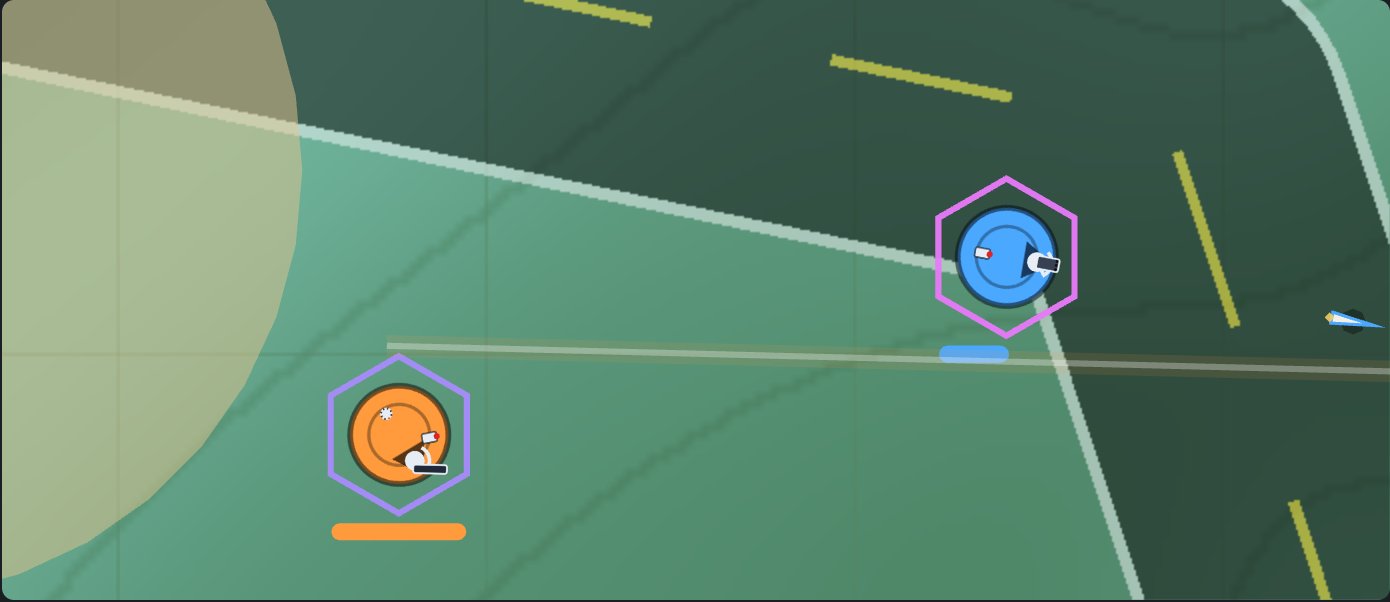
A programming game gives you all three. In thebotslam, you build a robot from parts, write its brain, and watch it fight in capture the flag, infiltrate, or last team standing (hide and seek is coming soon). Every match is feedback: your bot loses, you read the replay, you change one function, you run a test match again. That loop of write, debug, iterate is the skill tutorials never teach, and it works whether you are writing your first loop or your ten-thousandth.
The same criteria apply to Robocode, Screeps, and CodinGame, which also pit your code against opponents and force iteration. Honest caveat: thebotslam takes nine languages, JavaScript included, but only as subsets sized for a tiny bot CPU, and it plays its own match formats, so if you want the full JavaScript language or open-ended game building rather than bot battles, one of those alternatives may fit better. Pick whichever gets you past the blank editor fastest.
How long does it take to learn game programming through online courses?
Weeks for a playable project, months for a portfolio piece, a year or more for job-ready. Calendar time matters less than hours: 5 hours a week stretches every timeline threefold versus 20.
A first loop that moves a bot takes an evening. A working capture-the-flag strategy you can watch play out, like the test matches at thebotslam.com/faq/test-your-bot-before-a-match/answer, is realistic within two to four weeks of steady practice. That is the fastest honest answer to the tutorial wall: ship something that plays against you.
Persistent competitive worlds set the longer horizon. In Screeps, your code runs in a shared MMO universe around the clock, so improving means iterating against other players' bots over months (screeps.com). Job-ready follows the same curve: one finished, competitive bot beats ten unfinished courses.
Can online game programming courses lead to a real game industry job?
What studios actually look at
Hiring managers in games read code and shipped work, not certificates. A completed course tells them you paid; a playable build with a public repo tells them you can finish things and write code someone else can read.
Each pathway feeds the portfolio differently. Free self-study and courses give you the syntax and patterns, but the proof comes from what you build with them: a small game, a tool, or a bot that plays well. Competitive bot coding is a strong signal because your code's quality shows up directly in match results, and anyone can watch it run.
Be honest about the limits: no course, including structured ones, substitutes for a portfolio of finished projects. If your goal is a studio job, pick the cheapest path that keeps you building, then spend your hours on projects you can link to.
What should you build while taking online game programming courses to prove your skills?
Three artifacts, in order
Certificates prove you watched videos. Employers and teammates want to see three things: a finished small game, a bot on a public ladder, and source code someone else can read.
Start with the game. A two-week project you ship beats a six-month project you abandon. Then put a bot on a ladder. CodinGame runs contests and practice challenges where your code fights other people's code, and a visible ranking is a portfolio piece that updates itself. Screeps works the same way for JavaScript. The third artifact is the repo: clean commits, a README, code a stranger can follow.
Sequence them in that order. Each one feeds the next, and together they show you finish things, compete, and write readable code, which no certificate does.
How do you combine free resources into a structured game programming plan?
Free resources fail without structure, so give yourself one. Pick a weekly rhythm: one lesson block, one practice match, one build session. A Python learner could work through a free course two evenings a week, enter a test match on thebotslam or CodinGame on a third, and spend the weekend extending a personal project that uses the week's concept.
Set a fixed horizon, like eight weeks, and write down what each week's build must do before you start. A finished bot that beats the house bots is a real milestone; a folder of watched tutorials is not.
Run every self-assembled plan through the same honesty test: does it produce something runnable, and does it get harder each week? If your plan can't answer yes to both, tighten it. Structure is the only thing paid courses actually sell, and it costs you nothing but a calendar.
FAQ
Are paid game programming courses worth it if everything is available free?
Worth it only for what free lacks: a fixed topic order, graded exercises, and someone expecting your work. The material itself is rarely better. If you already stick to a schedule and get feedback from bot matches or a community, keep your money. If you stall after tutorials, structure is what you're buying.
Do I need a game programming online degree to work at a game studio?
Usually no. Studios hire on shipped code and a public portfolio, not transcripts. A degree matters when a work visa requires the credential or a large company's HR filter screens on it. It also forces the CS foundation self-taught devs skip, like data structures and graphics math. Otherwise, targeted courses plus finished builds beat tuition and years.
Can I learn game programming online free with no math background?
Yes, for game logic. Writing a bot's brain, building a Scratch or Python game, and iterating in matches needs loops and conditionals, not calculus. The math shows up later in pathfinding, physics, and rendering, where structured coursework helps. Start building now and pick up the math when a specific project demands it.
Is Python or C++ better for learning game programming online?
Python first for most adults: the gap between idea and running code is shortest, which matters when you're self-taught. Choose C++ only if engine-level work is the actual goal, since engines punish weak pointers and memory basics. A Python bot game delays a C++ switch, so be honest about where you want to end up before committing.
How much should I expect to pay for a good game programming course online?
Anywhere from zero to tuition. Free practice tools like Robocode and CodinGame cost nothing, and so do thebotslam's test matches and ladder (only its tournaments cost $5 a team). Some bot games, like Screeps, charge for the game itself, then leagues act as your feedback loop. Structured paid courses vary widely by provider, so pay only if you need deadlines and review, not for content you can find free.