Best Games to Learn to Code: a Programming Game for Your Language
Key takeaways
- A real programming game runs your code in a real language, pits it against opposition, and lets you keep iterating after the tutorial ends.
- Robocode suits Java learners and Screeps targets JavaScript; CodinGame, CodeCombat and thebotslam work in the browser, and thebotslam takes nine languages, from Python and JavaScript to C++, Java and C#.
- Filament-style puzzle games teach problem decomposition but never syntax, stack traces, or reading errors.
- Bot games transfer loops, conditionals, state tracking and debugging to real projects, but graphics, engines and distribution remain gaps.
- Avoid subscription-locked content, sandbox-only editors, and games written in a language you do not plan to use.
Table of contents
- Which games actually teach you to code versus just feel like coding?
- What's the best game for learning to code games in Java?
- Which browser-based games let you learn to code online with no install?
- How do games like Filament-style puzzle games compare to competitive programming games?
- How do you learn to code Android or iOS games as a beginner?
- The language-and-platform matching matrix
- How do you go from playing coding games to building your own game?
- What should beginners avoid when picking a learn-to-code game?
- How does thebotslam hold up against its own criteria?
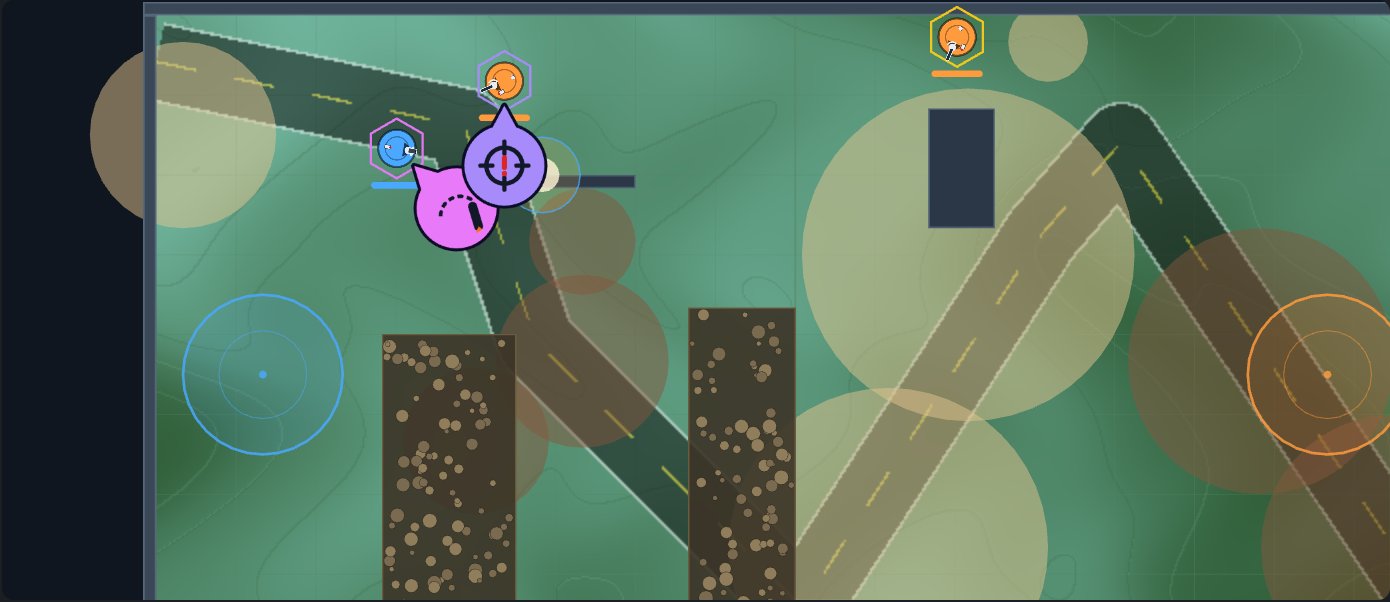
The best games to learn to code are the ones that match the language you are already learning and the platform you want to ship on: CodinGame and CodeCombat for browser practice in Python or JavaScript, Robocode for Java, Screeps for JavaScript at scale, and thebotslam for bot battles in whichever of its nine languages you're learning. This guide matches each to your goal.
Which games actually teach you to code versus just feel like coding?
Three tests for a real programming game
A real programming game passes three tests. First, your code runs in a real language like Python, C++ or JavaScript, not a simplified puzzle syntax. Second, your code faces opposition: another bot, a timer, or an opponent trying to beat you. Third, you can keep writing and shipping code after the tutorial ends, on your own terms.
Why tutorial-wall learners need opposition, not more lessons
The clearest signal comes from learners stuck exactly where you might be. On a GameDev.net thread about finding programming exercises, one poster wrote, "Simply reading about concepts and taking notes is not enough."
That gap is the whole problem. Quiz-style apps give you more lessons, and lessons are what you already have too many of. What breaks the wall is a game where you write a bot's brain, run it against opposition, lose, and iterate. That loop is what thebotslam is built on: build robots from parts, write their code, and send them into capture the flag, infiltrate or last team standing (hide and seek is coming soon). Robocode and Screeps pass the same three tests; most tap-the-answer apps fail the first one outright.
What's the best game for learning to code games in Java?
Robocode: the long-running Java bot game
If Java is your language, Robocode is the obvious starting point. It's a classic: you build a tank bot in Java, then watch it battle other bots in an arena. The loop is exactly what tutorial-stuck learners need: write code, run a match, see the result, fix the flaw. Because the bots are real Java classes, you practice inheritance, event handling and state machines without any game-engine setup getting in the way.
The trade-off is scope. Robocode teaches you to program bots, not to build graphical games with windows, sprites or levels. If your actual goal is shipping a game, a bot battle won't get you there alone.
thebotslam has a Java league too: your bot is a class that extends Bot, in a subset of Java that runs in the browser with nothing to install.
When Java is the wrong pick for your goal
Be honest about why you chose Java. If it's "it was in a course I took," consider whether Python or JavaScript matches what you want to build instead. If you're unsure whether you even need to write code before picking a game, the answer is probably less than you fear: Do I need to know how to code to play? Pick the language that matches the games you want to make, not the one you already half-know.
Which browser-based games let you learn to code online with no install?
If you want programming for fun without downloading anything, three browser options cover different goals.
CodinGame for puzzle-style practice
CodinGame (codingame.com) runs solo puzzles and multiplayer bot clashes in your browser, with Python, C++ and JavaScript among the supported languages. It suits you if you want short, self-contained problems rather than a long project.
CodeCombat for guided progression
CodeCombat (codecombat.com) walks you through levels that introduce syntax step by step. It fits the tutorial-wall moment: you type real code, but the game decides what comes next.
thebotslam's free test matches in the browser
thebotslam takes a different shape: you build a robot, write its brain, then run a free test match against house bots at capture the flag, infiltrate or last team standing. Unlike Robocode, which installs on your desktop, you stay in the browser, in Python, JavaScript, C++, Java, C#, Lua, BASIC, assembly or Scratch-style Blocks. If you can write a loop, you can play, and even if you can't, the tutorial and Blocks get you started (the answer to "do I need to know how to code?").
How do games like Filament-style puzzle games compare to competitive programming games?
What puzzle games teach and what they don't
Filament-style puzzle games teach you to decompose a problem: spot the pattern, break it into steps, test an order of operations. That skill transfers to real code. What they don't teach is a language. You drag logic tiles, you never write for loops, you never hit a syntax error, and you never learn to read a stack trace. If your goal is Python, C++ or JavaScript, puzzles are a warm-up, not the practice itself.
Why competitive coding games force real code
Competitive programming games put you under pressure to iterate. Your bot loses, you read why, you change one function, you run a test match, you lose again. That loop is what the GameDev.net poster asking for "beginner-intermediate level problems" was missing: a reason to keep editing code after it compiles. Screeps and Robocode work this way, and so does thebotslam, where you write a bot's brain and climb the ladder for your language.
Pick puzzles when you want to sharpen reasoning without touching syntax. Pick competitive games when you already know some syntax but can't make yourself write real programs. If you can do a basic text adventure but freeze on anything bigger, competitive is where the practice lives.
How do you learn to code Android or iOS games as a beginner?
Why 'build a mobile game first' fails
A full mobile game means windows, touch input, asset loading, app store builds, and a language like Kotlin or Swift on top of all of it. If you can write a text adventure but not a window, that stack buries you. You spend your sessions fighting tooling instead of practicing the logic you actually want to get good at.
A staged path from bot code to mobile
Start where the feedback loop is tight: write a bot's brain and watch it play a test match within minutes. That trains loops, state and decision-making, the same skills a mobile game needs later. If you're unsure which language to commit to first, Which language should I pick if I'm new to coding? breaks down the choice. Once your bot code feels routine, pick one mobile tutorial project and finish it, rather than starting from zero with both the language and the platform at once.
The language-and-platform matching matrix
Pick your row first: the language you want, then the install you can tolerate. The Screeps official site describes it as an MMO strategy game where you program your units in JavaScript, which makes it the clear pick if that is your target language and you want a persistent world.
| Game | Language | Platform | Install? | Concrete skill it teaches |
|---|---|---|---|---|
| thebotslam | Python, JavaScript, C++, Java, C#, Lua, BASIC, assembly, Blocks | Browser | No | Bot AI: sensing, targeting, team tactics, the tick loop |
| Robocode | Java (and .NET) | Desktop | Yes | Event-driven robot AI, geometry, radar logic |
| Screeps | JavaScript | Browser or Steam client | Optional | Long-running MMO scripts, economy management |
| CodinGame | Python, C++, JS, more | Browser | No | Competitive algorithms against other players |
| CodeCombat | Python, JavaScript | Browser | No | Syntax and basic problem solving |
| Scratch | Visual blocks | Browser | No | Loops, events, conditionals before any typing |
One honest gap: this matrix favors games with real code. If you want to build a windowed app or a shipped game, no row here gets you there directly; that is the next section's problem.
How do you go from playing coding games to building your own game?
What carries over directly
The core skills transfer cleanly. Writing a bot's brain for capture the flag or last team standing means real loops, conditionals, state tracking and decision logic. So does reading someone else's code to figure out why their bot beat yours: thebotslam's house bots come as programs you can load and read. Debugging under pressure, iterating on a strategy, and structuring code you'll rewrite next week are the same muscles you use shipping any software.
The gaps no programming game fills
Graphics and engines are the honest gap. Games like Robocode, Screeps and thebotslam abstract away rendering, assets and input handling, so your first window or sprite will feel new. Distribution is another: packaging a build for Steam or an app store is a separate craft. Expect the jump from bot logic to a full game to take weeks, not hours, and pick a small first project to cross it.
What should beginners avoid when picking a learn-to-code game?
Three traps catch most self-taught adults. First, subscription-locked content: if you can't try real levels free, you're buying a promise, not a game. Second, sandbox-only editors. Browser games are great for starting, but if every exercise lives inside the site's editor, you never touch your own files or tools. (In thebotslam you can save your code to files on your computer and write it in your own IDE with downloadable API stubs.) Third, and biggest: picking a game in a language you don't plan to use.
A Python learner grinding JavaScript puzzles builds two shallow skills instead of one real one. Check that a game actually exercises your language before committing. CodinGame, for example, supports multiple languages across its puzzles and contests, so you can match it to what you're already writing. Match the game to the language, then let the fun carry the repetition.
How does thebotslam hold up against its own criteria?
Where it passes
Real code: you write your bot's brain in a real language's syntax, not fill-in-the-blank snippets, so a test match is a genuine programming exercise. Opposition: house bots, the ladder and tournaments mean your code faces programs other people wrote, which is the test most puzzle games skip. Iteration: a loss tells you something specific, so you rewrite, re-run, and see the result within minutes. And it's free to learn on: building, coding, test matches and ladder matches cost nothing; only tournaments have an entry fee.
Where it falls short
It teaches you to write bot logic, not to build a game with graphics, sprites or an engine, so it will not carry you to shipping an Android or iOS title. And every language is a subset for a small bot CPU, with no libraries or imports, so you learn a language's core, not its ecosystem. If your goal is game-engine work, pair it with a project, not a replacement.
FAQ
Can you really learn to code by making games, or do you still need courses?
You can learn real code through games if the game has you writing actual Python, C++ or JavaScript against opposition. What games replace is not lessons but the missing practice loop: write code, test it, lose, iterate. If you already have tutorials piling up, a competitive bot game is the piece you lack, not another course.
What's the easiest programming game for a complete beginner with no coding experience?
CodeCombat is the gentlest entry, since levels introduce syntax step by step while you type real code. Scratch works if you want loops and conditionals before any typing at all. thebotslam's tutorial walks you through a first bot, and its Blocks language needs no typing; once you can write a basic loop, its free test matches against house bots are an easy first competitive step.
Do programming games teach Python, and can I use Python for bots?
Yes. CodinGame, CodeCombat and thebotslam all support Python, and Python is a perfectly good bot language: loops, conditionals and state tracking carry over to any later project. Screeps is the exception, since it runs JavaScript. Robocode is Java-first, so Python learners should pick a browser option instead of installing it.
Are coding games worth it for adults, or are they just for kids?
They are worth it for adults stuck in the tutorial loop, which is a common self-taught adult problem, not a kid problem. Competitive bot games force you to debug under pressure and rewrite your own code, skills quiz apps never touch. The trap for adults is picking a game in a language you do not plan to use.
How long does it take to get competitive on a programming game ladder?
Expect a range, not a fixed number, since it depends on your starting syntax and how often you iterate. The useful benchmark is the loop itself: if you can write a bot, lose a match, identify one flaw, and re-run within minutes, you are improving. Most ladder climbing comes from that repetition, not from long study sessions.