Coding Challenges for Beginners: A Progression Map to Bot AI
Key takeaways
- Good beginner coding challenges give fast feedback, a clear win condition, fit in one sitting, and sit slightly beyond your current skill.
- Progress through three milestones: input/output and conditionals, then loops and collections, then state-heavy projects like a bot brain or text game.
- Use the one-in-five rule: move up a level when roughly one challenge in five forces you to look something up.
- Timebox debugging at 30 minutes per bug and rebuild finished challenges from a blank file the next day.
- Python has the least setup friction for beginners, while Java and C# add boilerplate that makes small self-contained exercises matter more early on.
Table of contents
- What makes a coding challenge good for a total beginner?
- Which coding challenges should I try first in Python?
- Which coding challenges should I try first in JavaScript?
- Which coding challenges should I try first in Java or C#?
- Where can I find free coding challenges for beginners in C?
- How do I know when to move from easy to intermediate challenges?
- How do I practice challenges without getting stuck or giving up?
- What does the same challenge look like at each milestone?
The right coding challenges for beginners start with input/output and conditionals, move to loops and collections, then finish with multi-step projects like a bot brain or a text game. This guide gives you that progression for Python, JavaScript, Java, C#, and C, with the same challenge written at each stage so you can see what progress actually looks like.
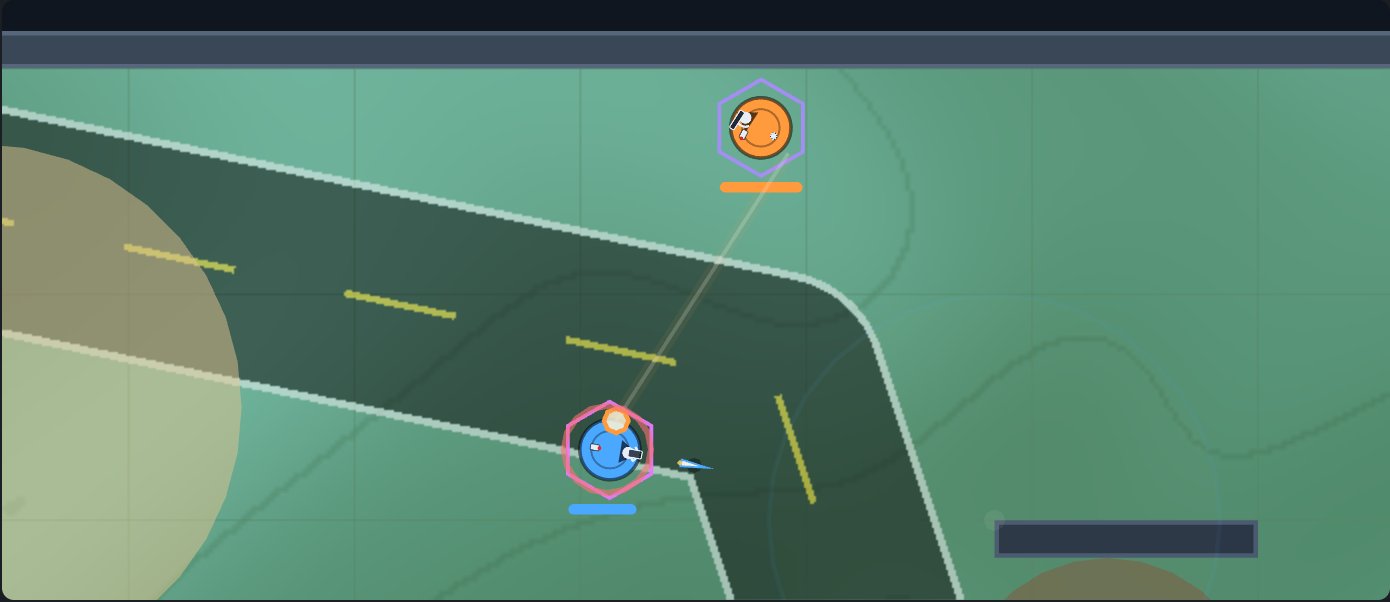
What makes a coding challenge good for a total beginner?
Most beginners do not fail at challenges because the challenges are too hard. They fail because the challenge gives no clear signal that they finished, or it takes three hours of setup before any code runs. One learner on a GameDev.net thread on finding programming exercises put it plainly: reading about concepts and taking notes is not enough, and they could not figure out where to start practicing. A good challenge fixes that by being small, concrete, and slightly past your current skill.
The four criteria
- Fast feedback. You run the code and see the result in seconds, not after a build step.
- Clear win condition. You know exactly what "done" means: the tests pass, the bot wins, the output matches.
- One sitting. You can finish it in under two hours, including debugging.
- Slightly beyond current skill. If you can solve it without thinking, move up a tier.
Running the popular options through the same test
| Tool | Fast feedback | Clear win condition | One sitting | Slightly beyond skill |
|---|---|---|---|---|
| CodinGame | Yes | Yes | Yes | Tiered puzzles, yes |
| CodeCombat | Yes | Yes | Yes | Shallow at the top end |
| Robocode | Yes | Yes (win the duel) | Mostly | Java setup adds friction |
| Screeps | Slow (ticks) | Fuzzy at first | No | Steep early curve |
| thebotslam | Yes, per match | Yes (win or lose) | Yes | Yes, with Novice to Open tournaments |
The honest weakness for thebotslam is setup overhead: you assemble a bot and write its brain before your first match, which costs more than opening a browser puzzle. The tradeoff is that you can change code between matches and see the result immediately, which is feedback a static test suite cannot give you.
Which coding challenges should I try first in Python?
Python is the most common first language for self-taught adults, so start with challenges that use only input, output, and conditionals: a script that asks for two numbers and prints the larger one, a temperature converter, a yes/no decision tree. These take minutes, not evenings, and they confirm you can read and write basic syntax.
Milestone 2: loops and collections
Next, loop over lists and dictionaries. Good challenges: count word frequencies in a sentence, find the highest score in a list, build a shopping cart that totals items. This is where most tutorial graduates stall, so stay here until loops feel boring rather than hard.
Milestone 3: state, small projects and bot AI
Third, build something with state that persists between steps: a text adventure with an inventory, or a bot brain. thebotslam's Python league fits this milestone exactly. You write a bot's brain, its AI, run free test matches, and change code between matches to see results immediately. If you get stuck on milestone 3, drop back to milestone 2 challenges rather than rereading tutorials.
Which coding challenges should I try first in JavaScript?
Start in the browser console: press F12 on any page and you have a zero-setup environment for input/output, conditionals, and loops. Convert temperatures, build a number-guessing loop, then move to arrays and small state machines like a turn counter or a simple inventory.
For the third milestone, JavaScript's advantage is the DOM. Build a click-based choose-your-own-adventure page, then a small game with visible state. Scratch shows the same idea at a younger level: programs that produce something on screen, not just printed output.
Once you want opponents instead of screens, Screeps runs JavaScript against real players, and thebotslam lets you write a bot brain and see it fight in test matches.
Which coding challenges should I try first in Java or C#?
Use the same progression as Python or JavaScript: input/output and conditionals first, then loops and collections, then small state machines. The difference is friction. Java and C# force a class, a main method, and a compile step before anything runs, so a two-line idea becomes ten lines of scaffolding.
That friction makes small, self-contained challenges matter more early on. Pick exercises where the boilerplate is identical every time and the thinking lives in one method: FizzBuzz, a number guesser, a word counter on a fixed string. Once the setup is muscle memory, stop noticing it.
If you're still deciding between the two, the tradeoffs are laid out in which language to pick if you're new to coding. Both work for bot brains; C# tends to feel less verbose for beginners, Java has more tutorial material to copy from.
Where can I find free coding challenges for beginners in C?
C has fewer polished beginner platforms than Python or JavaScript, so build your own progression instead. Start pointer-free: exercises that read input, branch on conditions, and print output. Second, move to arrays and strings, where you hand-roll what Python gives you for free, like reversing a string or counting word frequencies. Third, tackle manual memory: malloc a buffer, resize it, free it, and fix the segfaults. K&R exercises and university problem sets fill this role well, and the C standard library documentation on cppreference tells you exactly what each function promises.
Games with a C-like entry point also work here. thebotslam has no C league, but its C++ league writes bot brains Arduino-style, close to C, and its tabs guide shows how test matches and the tutorial map bot behavior to code. The same state-machine thinking transfers to a C bot brain.
How do I know when to move from easy to intermediate challenges?
Three signals you are ready
First, you finish easy challenges without looking up syntax. If you never open documentation mid-solve, the level has stopped teaching you anything.
Second, you can sketch a plan before typing: which variables hold state, which function does what. If the plan comes together in a minute or two, the problem-solving part is done and you are just transcribing.
Third, debugging takes minutes, not days. When a bug is a typo you spot in two minutes rather than a logic hole that eats an evening, you are ready for harder problems.
The one-in-five rule
Pick a level where roughly one challenge in five forces you to look something up. That ratio means most attempts build fluency while the occasional stumper stretches you.
If zero in five send you to documentation, move up. If three or more do, drop back a level for a week. The same test applies to any format, from loop drills to writing a bot brain for a test match.
How do I practice challenges without getting stuck or giving up?
Timebox the debugging
Set a hard limit, like 30 minutes, on any single bug. When the timer ends, either look up the specific error message or start the file over. Stuck learners rarely fail because the problem is too hard; they fail because hour three of staring at the same loop kills the habit before it forms.
Rebuild from a blank file
Solving a challenge once teaches you less than solving it twice. After you finish one, delete your code and rewrite it from an empty file the next day. The second pass exposes what you actually understood versus what you copy-pasted, and it is where conditionals and loops stop feeling like trivia.
Pick challenges you actually care about
This is the most repeated advice in the GameDev.net thread linked earlier: match the challenge to your interests. One poster there said they find it fun and helpful to go through exercises while hanging out instead of just playing games on their phone. That is the whole trick. If you like robots, write a bot brain for a capture the flag match instead of a calculator. Programming games like Robocode or Screeps survive the motivation problem because the feedback loop is a match result you can watch, not a green checkmark, so a losing bot is a concrete next task: find where it got flanked, fix the logic, queue a rematch.
What does the same challenge look like at each milestone?
The best way to see your own progress is to rewrite one routine three times. Here is a "find the nearest target and move toward it" task, the kind of code every bot brain needs.
Version 1: hard-coded steps
You know where the target is, so you write it directly: move_right(10); move_up(5). It works, but only for that one map. This is the input/output stage: one path, no decisions.
Version 2: loop over targets
Now the target's position is unknown. You scan for targets, keep a closest variable, compare distances in a loop, then move toward the winner. This is the loops-and-collections milestone, and it already beats a player who moves at random.
Version 3: reusable function with edge cases
You wrap it in def chase_nearest(me, targets): and handle the cases that break version 2: an empty target list, two targets at equal distance, a target behind a wall. You return a heading instead of moving directly, so the same function drives capture the flag, infiltrate, and last one standing bots.
That third version is where a programming game pays off. In a thebotslam test match, your edge-case handling either holds the flag or it doesn't, and the replay shows exactly which case you missed.
FAQ
Are online coding challenges for beginners actually free, or do they hit a paywall?
Most beginner-level puzzles on platforms like CodinGame and CodeCombat are free, with paid tiers aimed at interview prep or company screening. The progression in this guide needs nothing paid: browser consoles, K&R exercises, and free test matches cover all three milestones. Budget for zero dollars until you specifically want ranked competition or certificates.
Can I do coding challenges in Python if that's the only language I know?
Yes, and you should. Python covers the full progression: input/output drills, loop and collection work, and state-heavy projects like a bot brain or text adventure. Its short syntax means less time fighting boilerplate and more time on logic. Stay in one language until loops feel boring, then branch if a project genuinely needs another.
How long should a beginner spend on one coding challenge before looking at the solution?
Timebox debugging at roughly 30 minutes per bug, and cap total time on a challenge at one sitting, about two hours. Past that, look up the specific error message or the relevant concept, not the full solution. If three or more challenges in five send you to documentation, drop back a level for a week.
Do coding challenges help if I want to build games, not pass interviews?
They help more than generic drills, if you pick the right kind. Programming games like Robocode, Screeps, or a bot league give you a visible match result instead of a green checkmark, so a losing bot becomes a concrete next task: find where it got flanked, fix the logic, queue a rematch. That feedback loop survives the motivation problem.
Should I do challenges in C, C#, or Python if I'm teaching myself?
Start with Python unless a specific goal points elsewhere. It has the least setup friction, so early challenges run in seconds rather than after a compile step. Choose C# if you want less verbosity than Java with similar structure, and C only when you specifically want to learn memory management. The progression itself stays identical across all three.